

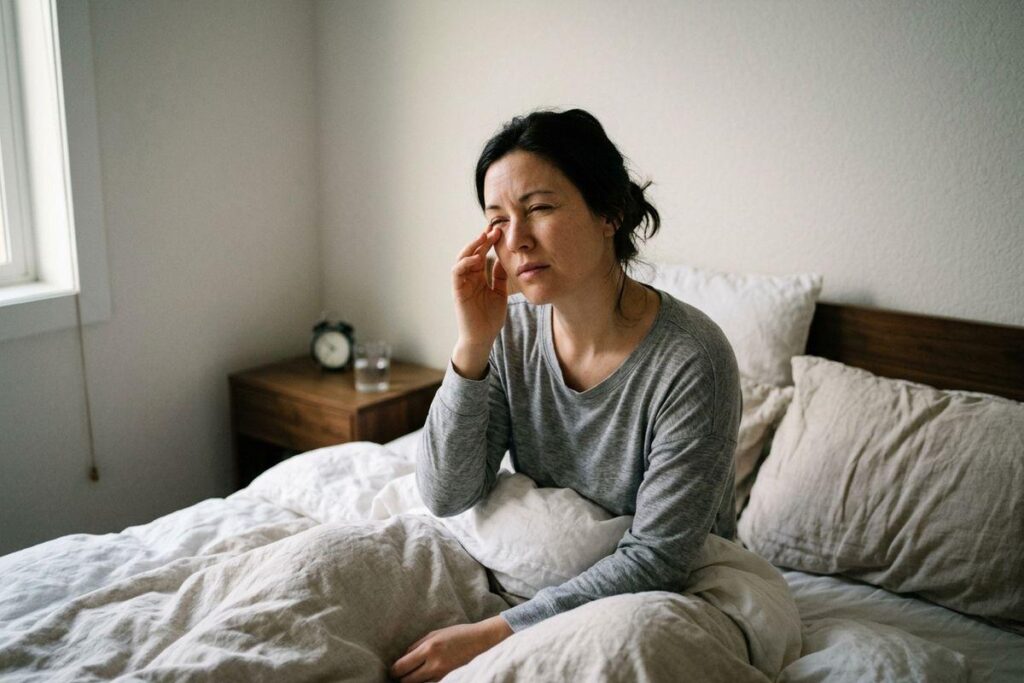
Scratchy, stinging eyes at 7 a.m. can set a rough tone for the day. It’s common enough that most people treat it as a normal part of waking up. The gritty feeling usually fades after a few minutes, and any blurriness clears once you blink a few times. That quick fade is part of why morning dryness goes unmentioned for months.
Morning dry eye usually happens because your eyes lose moisture overnight, whether from your sleep environment, lids that don’t fully close, or tears that evaporate too fast.
What Dry Eyes in the Morning Feel Like
Most people describe it as sand trapped under the lids. That first blink can sting before you’ve even sat up. Dry eye covers a group of problems on the surface of the eye, and the morning version shows up a few ways:
- A gritty, sandy feeling the moment you open your eyes.
- Redness that lingers past your first coffee.
- Burning or itching along the edges of your lids.
- Blurriness that clears after you blink a few times.
Common Reasons Your Eyes Dry Out Overnight
Several small things can add up while you sleep. Knowing what’s behind the dryness makes it easier to fix.
Sleep Environment
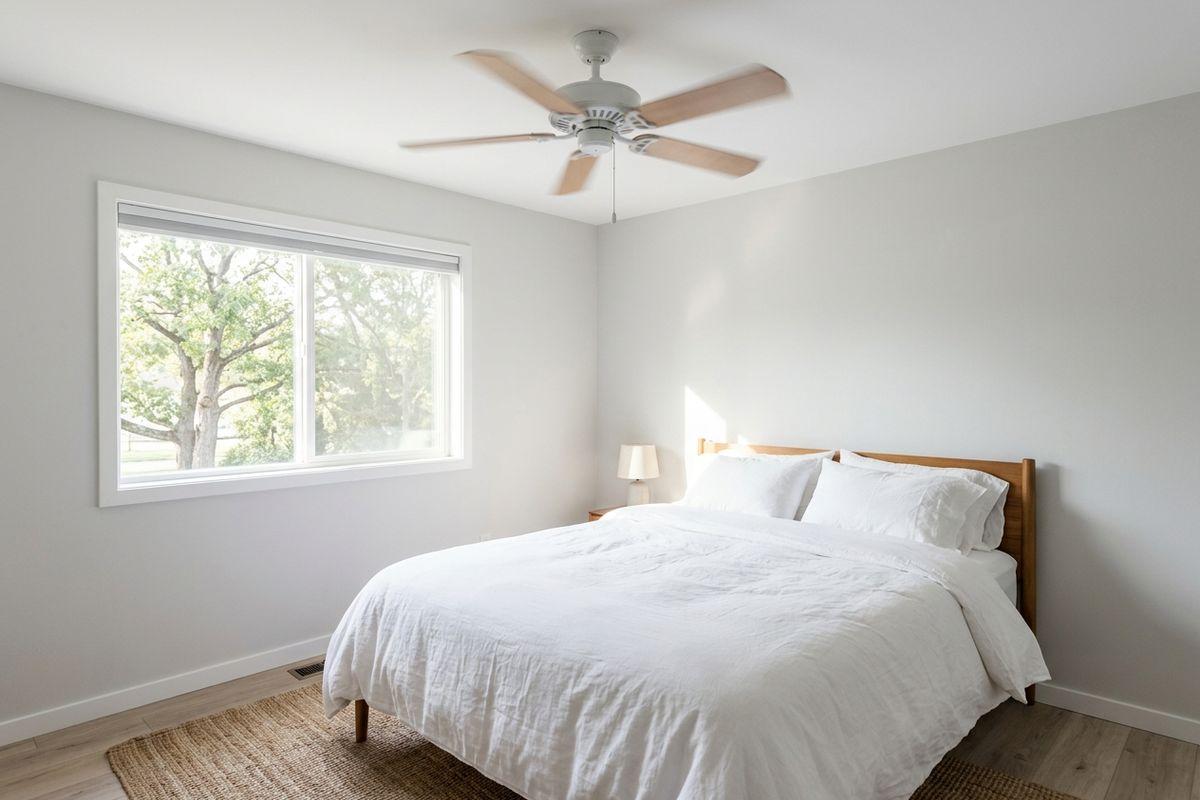
A ceiling fan pointed at the bed or a heating vent near your pillow, moves air across your face for hours at a stretch. Moving air speeds up how quickly tears evaporate, so aim vents away from where you sleep.
Winter makes it harder. Furnace heat drops indoor humidity, and dry air pulls moisture off your eyes the same way it chaps your lips.
Dust and pet dander settling on your pillowcase add irritation on top of that, and if your skin feels tight when you wake up, your eyes are dealing with the same air.
Eyelids That Don’t Fully Close
About 20% of people sleep with their eyes open at least a little, a condition called nocturnal lagophthalmos. The gap is often tiny, sometimes only a millimetre or two.
Air reaches the eye surface through that opening all night, and you’re not blinking to spread tears back over it.
Most people never spot it on their own until a partner mentions it, or until one eye wakes up far rawer than the other.
Contact Lenses and Medications
Two things you go to bed with can leave your eyes short on moisture by sunrise.
Sleeping in contact lenses puts a barrier between your tear film and the front of your eye, so the surface underneath gets less moisture through the night.
Antihistamines and certain antidepressants work from the other direction, lowering how many tears you produce in the first place. Bring your medication list to your next exam, since it often explains a pattern nobody could account for otherwise.
How Tears Keep Your Eyes Comfortable
Tears work all day, keeping the surface smooth and your vision clear between blinks. 3 layers make up the film coating your eye:
- An oil layer that slows down how fast tears evaporate.
- A water layer that keeps the surface moist and rinses away dust.
- A mucus layer that helps everything spread evenly.
When the oil glands along your lid margins get clogged, the oil layer thins out, and tears disappear faster than they should. Age and hormone changes can lower tear production as well, which is why dryness tends to creep in over the years.
How to Relieve Dry Eye in the Morning
A heated eye mask, such as a Bruder mask, can be part of a bedtime routine for morning dry eye. The gentle heat can help soften oils in the eyelid glands, supporting a healthier tear film.
Run a humidifier in the bedroom and aim for 30 to 50 percent humidity. Drink water throughout the day too, since staying hydrated supports tear production.
Wipe your lids with a gentle cleanser before bed to clear oil and debris off the lash line.
Daily Habits That Can Ease Dry Eye
Screens cut your blink rate. We normally blink around 17 times a minute, and concentrated work up close drops that to roughly 4, so fewer tears get spread across your eyes.
Take a break every 20 minutes using the 20-20-20 rule: look at something at least 20 feet away for 20 seconds, and blink a few times while you’re there.
Bring along wraparound sunglasses outdoors so wind can’t strip moisture on your walk. And if mornings are consistently rough, an overnight gel or ointment can hold moisture longer than a regular artificial tear.
When to See an Optometrist About Morning Dryness
Home care handles plenty of mild cases. Dryness that sticks around for weeks, or vision that stays hazy after you blink, is worth having looked at. An exam can show whether your oil glands are blocked and how quickly your tears break up on the surface.
From there, your optometrist may suggest a mix of at-home and in-clinic options such as:
- Prescription medication or eye drops matched to what’s driving the dryness.
- Ointments made for overnight use.
- Punctal plugs, which keep tears on the surface longer.
- Omega-3 supplements that support the oil layer of your tears.
- IPL and RF treatments that warm blocked oil glands so they drain.
Getting Help for Morning Dry Eye
Keep a quick note for a week: which eye feels worse and how long the scratchiness lasts. Bring it with you, because that pattern helps us narrow things down faster.
Village Optical can assess your tear film and build a plan around what we find. Book an appointment to talk through your options with our ocular hygienist.