


Key Takeaways
- Contact lenses sit on the surface of your eyes and can disrupt your tear film.
- Symptoms such as burning, redness, and blurred vision may indicate contact-related dryness.
- Lens type, fit, screen time, and hydration all play a role.
- Simple daily changes can help reduce discomfort.
- Ongoing symptoms are worth discussing with an eye care team.
You put your contacts in the morning, and at first, they feel fine, but by mid-afternoon, your eyes are burning, red, and begging for a break. If that sounds familiar, you’re not imagining it. Contact lens discomfort is one of the most common reasons people come see our team at Village Optical.
Certain contact lenses can interfere with your natural tear film, sometimes reducing oxygen flow to the eye’s surface, and that disruption is often what contributes to dry eye symptoms during lens wear. The good news is that there are practical ways to manage it, and our eye care team can help.
Why Contacts and Dry Eye Often Go Together
Your eyes rely on a thin, complex layer of tears to stay comfortable and clear. When you wear contacts, the lens sits right on top of that tear film. This can disrupt the normal moisture balance and reduce how much oxygen reaches the surface of your eye.
That combination matters more as the day goes on. Tear evaporation can increase with lens wear, and your eyes may have a harder time keeping up. What starts as minor dryness in the morning can feel much worse by evening.
Signs Your Dry Eye Is Contact-Related
Common Symptoms to Watch For
Dry eye with contacts doesn’t always feel like dryness. Sometimes it shows up as something else entirely. Though it feels a little different for everyone, watch for these signs during or after lens wear:
- Burning, stinging, or a gritty feeling, like something is in your eye.
- Redness or blurred vision that creeps in by mid-afternoon.
- Watery eyes or trouble keeping your contacts in comfortably all day.
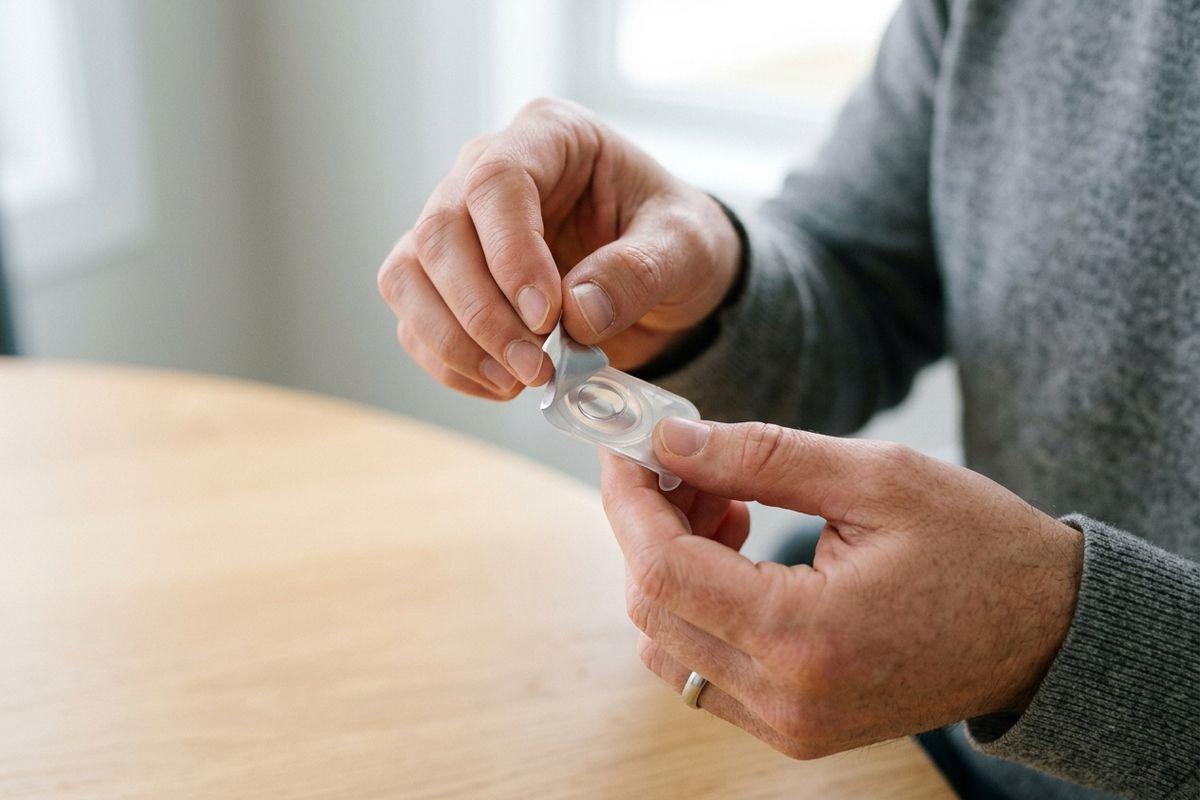
How to Tell If Your Contacts Are Making Dry Eye Worse
A simple test can often give you some useful information. Remove your contacts for a full day and pay attention to how your eyes feel. If the burning or irritation fades without your lenses in, that may be a sign the contacts are contributing.
Also, try to notice when the discomfort starts. Symptoms that kick in only after you’ve put in your contacts may point to a different issue than symptoms that slowly build throughout the day. Both are worth thinking about before your next eye exam.
What Makes Dry Eye Worse with Contacts
Lens and Fit Factors
Not every type of lens works for everyone’s eyes. A lens that doesn’t match your eye shape or moisture needs can cause friction and dryness, even if it is the right prescription. These are common lens-related contributors:
- Wearing the wrong lens material.
- Keeping contacts in longer than recommended.
- Not replacing lenses at the recommended interval.
- Using a contact solution that irritates or dries out your eyes over time.
Environmental and Lifestyle Factors
Your surroundings affect your eyes more than you might expect. Air conditioning can pull moisture from the air, and that dryness reaches your eyes, too. Wind, heated indoor air in winter, and long hours in front of a screen can all add up.
When you’re focused on a computer monitor or phone, you tend to blink less often. Blinking is what spreads your tear film across the eye’s surface, so blinking less means your eyes can dry out faster.
Simple Ways to Reduce Dry Eye with Contacts
Daily Habits That Help
Small, consistent changes can make a real difference in how your eyes feel throughout the day. These habits are easy to start:
- Try the 20-20-20 rule: Every 20 minutes, look at something 20 feet away for 20 seconds to give your eyes a break.
- Consider drinking more water and adding omega-3s to your diet, found in supplements or fish, flaxseed, and walnuts, as these may support tear quality for some people.
- Run a humidifier at home or at your desk if indoor air tends to be dry.
Lens and Care Adjustments
Sometimes the fix comes down to the lens itself. Daily disposable lenses reduce the buildup that accumulates on reusable lenses and can contribute to irritation. Silicone hydrogel lenses allow more oxygen through, which helps the eye surface stay more comfortable during wear.
It’s also a good idea to replace your contact lens case regularly, as bacteria and residue build up faster than most people realize.
For more severe dryness, scleral lenses are worth considering. They vault over the cornea (the clear outer layer of your eye) and hold a small reservoir of moisture in place all day.
When to See an Eye Doctor
Some dryness responds well to simple adjustments, but if your symptoms aren’t improving, or if they’re getting worse, it’s time to get a professional opinion.
Reach out to our team if:
- You are experiencing frequent irritation while wearing contact lenses.
- Discomfort continues even after you remove your contacts.
- Redness, irritation, or vision changes are getting more frequent or intense.
- You’ve already tried switching contact lens solutions or reducing wear time without relief.
Discover Dry Eye Therapy in Winnipeg
Our team at Village Optical is dedicated to helping you figure out what’s contributing to the problem and talking through options that fit your eyes and lifestyle. Whether you’re looking for contact lenses that might be better suited for your eyes or want to explore dry eye therapy, we’d love to help. Book your next eye exam today.