

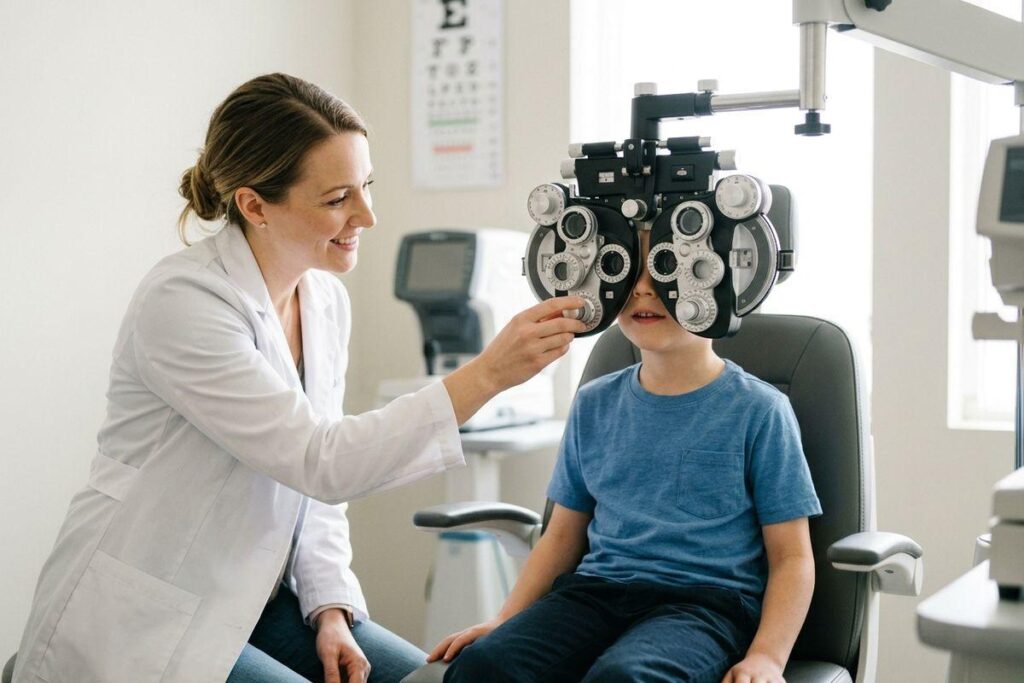
Myopia, or nearsightedness, means the book in your hands stays sharp while the street sign down the block turns fuzzy. Parents or teachers usually spot it first in a kid who squints at the whiteboard.
Myopia develops when the eyeball grows slightly too long or the cornea curves too steeply, and family history, long stretches of close-up focus, screen habits, and limited outdoor time all feed into it. That mix is why myopia management looks at your genes and your daily routine together.
Why Blurry Vision Happens
Light entering your eye is supposed to land right on the retina at the back. When the eyeball is too long or the cornea too curved, light focuses just in front of the retina instead, and anything far away loses its edges.
Close-up objects still land where they should, which is why reading feels perfectly fine. That gap between near and far is the whole experience of being nearsighted.
How Family History Shapes Your Risk
Genetics play a significant role. Kids with one or both parents who are nearsighted are more likely to become nearsighted themselves, and their prescriptions often change faster year over year.
Dig into your family history before your child’s next appointment. Even a rough sense of who wore glasses as a kid gives your optometrist something useful to work with. Habits still influence how quickly things move from that starting point, though, which is where the rest of this comes in.
How Daily Habits Affect Your Eyes
Genes set the stage, but your everyday routine matters too. The way you read, study, and use screens can add stress to your eyes over time.
Close-Up Work and Reading
Your eyes hold a lot of tension during near work, and it accumulates over a school year.
Hold reading material about 40 centimetres away instead of tucking it under your chin. Look up every 20 minutes or so and focus on something across the room for 20 seconds.
Homework, tutoring, and reading for fun all stack onto the same demand. It’s one reason myopia so often turns up during the school years.
Screen Time and Indoor Life
Phones and tablets sit closer to the face than books do, and they hold attention a lot longer.
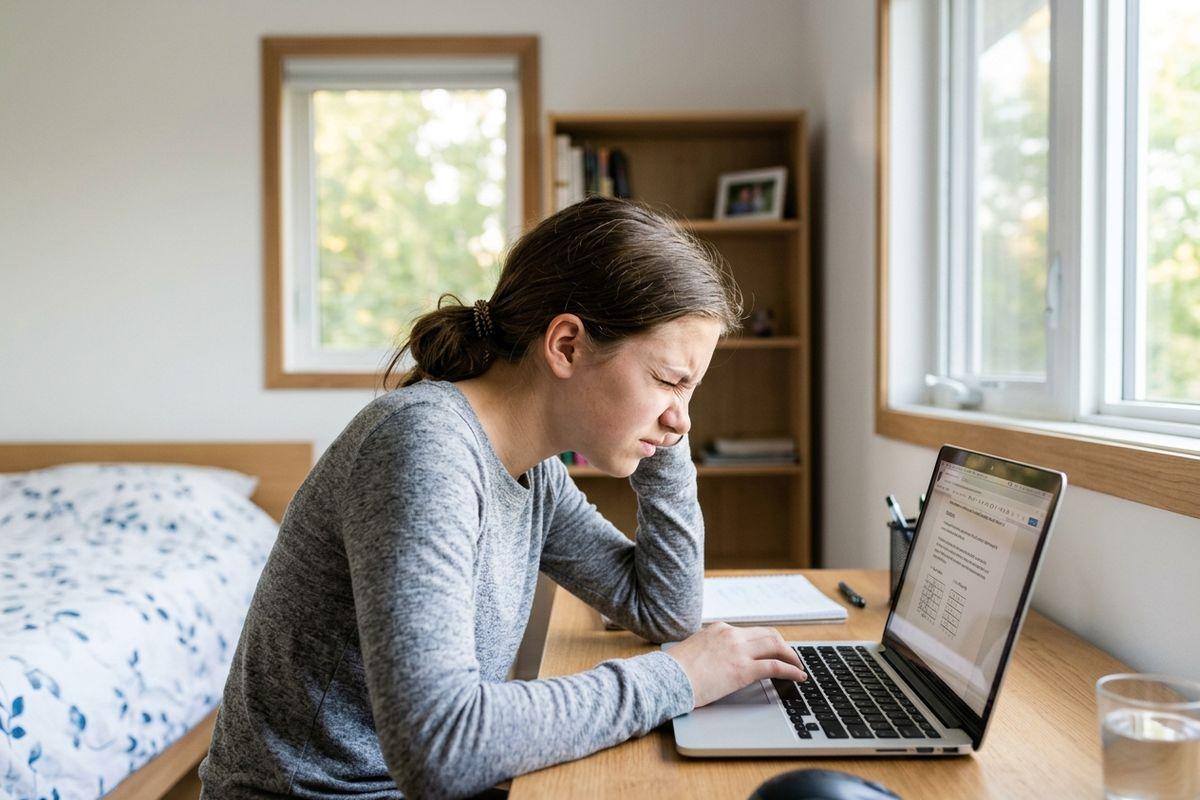
Set your device an arm’s length away and bump up the text size rather than leaning in. Long sessions can also bring on digital eye strain, which tends to show up as tired eyes, headaches, or blurring by the end of the day.
Screen time also happens indoors almost by definition, and that has a cost of its own.
How Outdoor Time and Light Protect You
Outdoor light is far brighter than anything in your living room, and growing eyes seem to respond to it.
Get your kids outside for 40 to 80 minutes a day when the weather cooperates. Bright daylight may help slow the lengthening of the eye, which is the change driving myopia in the first place.
Distance viewing comes free with it. A backyard, a rink, or a walk to the park gives young eyes something far off to settle on. Sunglasses still matter out there.
Signs Worth Paying Attention To
Kids rarely announce that they can’t see. They adapt instead, and the adaptations are what you’ll notice:
- Squinting or blinking hard to bring things into focus
- Sitting right up against the TV
- Holding a tablet close to the face
- Complaining of headaches after school
- Losing patience with reading or the board at school
Adults tend to notice it in other ways. Night driving gets harder, and highway signs stay unreadable until you’re nearly on top of them.
Regular Exams Track the Changes
Book an eye exam even when nobody’s complaining. An optometrist can measure vision changes before they start interfering with reading, learning, or sports. Here’s what your appointment can sort out:
- How much myopia is present right now
- Whether the prescription has moved since last time
- Which management options may suit your child’s age and lifestyle
- Whether anything else is contributing to the blur
Bring your questions along. We don’t mind them, and the answers tend to be more useful when your optometrist knows what’s actually worrying you.
Ready to Get Ahead of the Blur?
Myopia has plenty of factors, but no single one explains every case. Family history, hours of near work, and time spent indoors each nudge things along in their own way.
It means a lot when families trust our team enough to send along their friends and relatives. The optometrists at Village Optical see patients at every age, from toddlers to grandparents. Book an appointment or call 431-813-2757, and let’s talk through what your family’s history and daily habits may mean for your vision.