

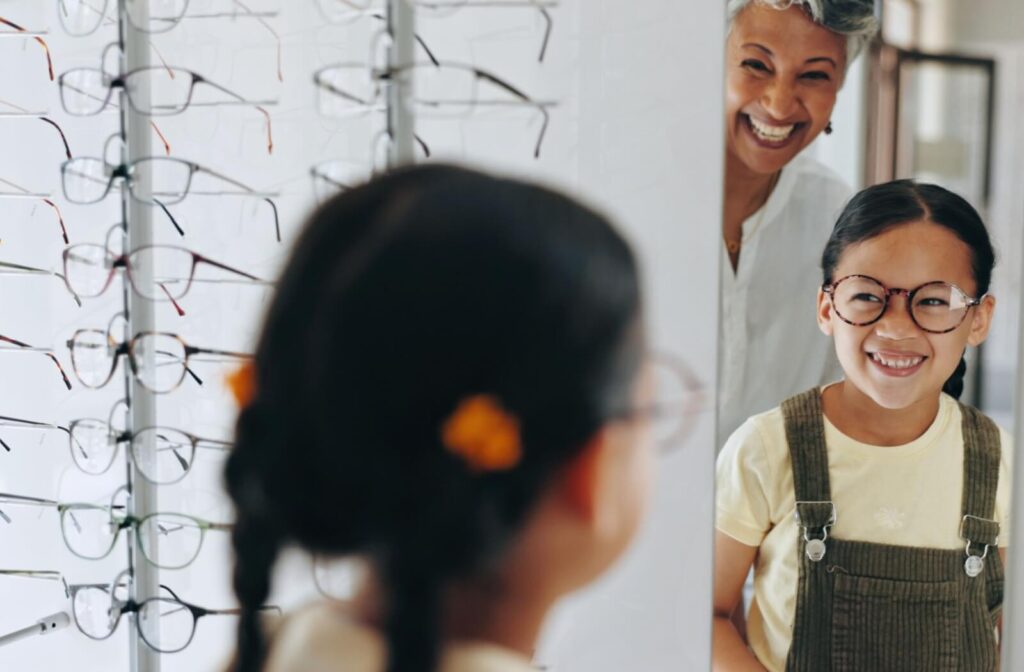
Myopia, or nearsightedness, is one of the most common vision changes parents notice in school-aged kids. Objects up close stay sharp, but anything across the room, like the whiteboard at school, turns blurry.
Myopia glasses are lenses that sharpen blurry distance vision while also helping to slow how quickly nearsightedness progresses in young eyes.
The condition often shows up between ages 6 and 8. As kids grow, their eyes grow too, so nearsightedness can keep progressing for years. Spot it early, and you may have more options for managing it before it advances too far.
Signs to Watch For
Kids don’t always say their vision looks blurry, so it helps to know the other clues. Watch for:
- Squinting to see things at a distance
- Sitting very close to the TV or a screen
- Rubbing their eyes often
- Tilting their head to see better
- Holding books close to their face
How Myopia Glasses Work
Regular glasses fix one problem, blurry distance vision, and stop there. Myopia glasses handle both tasks together, correcting vision while helping manage growth over time.
The centre of the lens stays clear, so your child sees sharply straight ahead. The outer part of the lens sends the eye a gentle signal to slow its growth, which is what drives nearsightedness forward.
Your child gets clear sight for the classroom and the soccer field, plus support that may help slow the changes happening inside their eyes.
Types of Myopia Control Glasses
Several lens designs can help manage myopia, and each one takes a slightly different approach. Book an eye exam, and the team can help you figure out which one suits your child.
MiYOSMART and Stellest Lenses
Both use tiny segments, called lenslets, spread across the lens. MiYOSMART arranges them in a honeycomb pattern, while Stellest arranges them in rings. Either way, the centre stays clear for sharp vision, while the surrounding lenslets send that slow-down signal to the eye.
SightGlass Lenses
These lenses spread light across the retina using thousands of tiny dots, which softens the signal that drives eye growth.
Bifocals
Bifocals take a different approach, splitting the lens into a distance zone up top and a near zone at the bottom. This design can also ease some of the strain that pushes myopia along.
Do Myopia Glasses Actually Work?
Research on these lenses points to a slowdown of about 50% in how fast myopia progresses, according to a review of myopia management studies. That can add up to real differences for your child day to day, including:
- Fewer prescription changes and fewer trips back for new glasses
- Less eye strain during long stretches of homework or screen time
- Slower progression of nearsightedness through the school years
Results vary from child to child, but starting early gives the lenses more time to help.
When Should Your Child Start?
Start early, and the lenses have more time to help slow things down. Many kids begin between ages 6 and 8, right around when myopia tends to appear.
Vision often settles down around age 16, once the eyes finish most of their growth.
Choosing the Right Pair
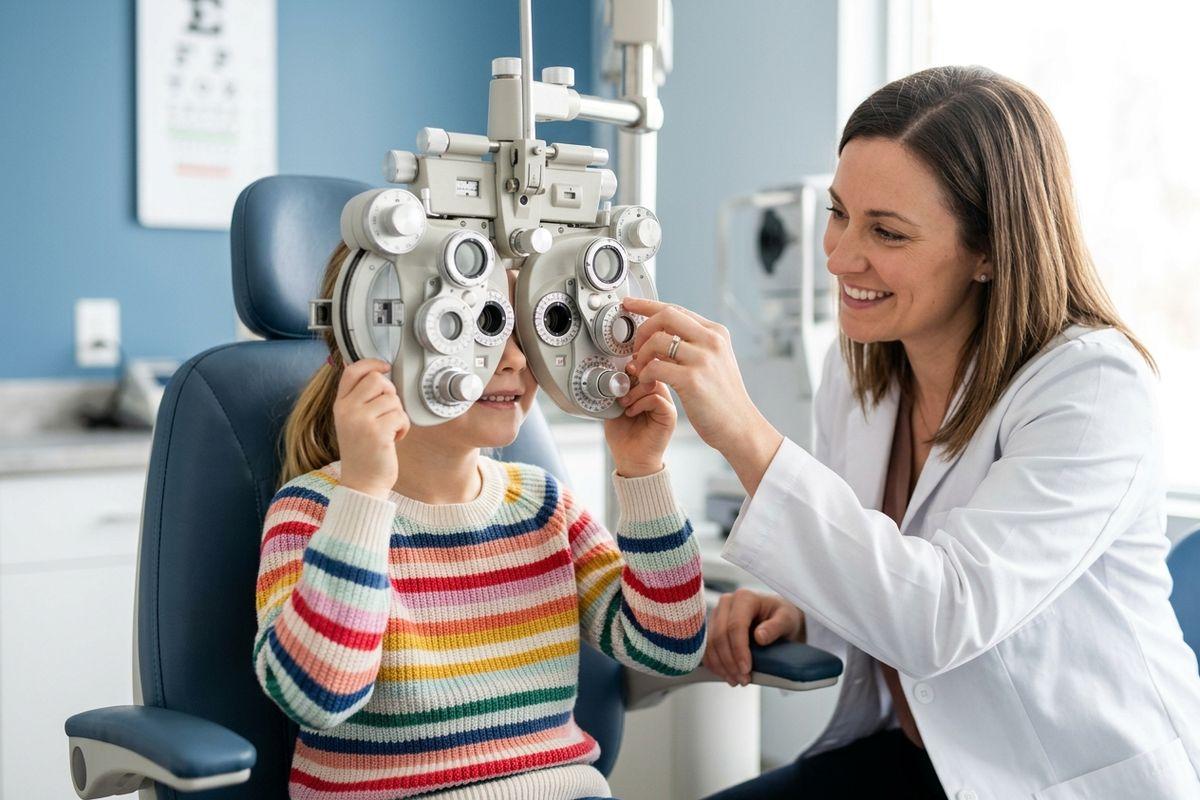
Book a full eye exam first. The team measures your child’s vision and matches the lenses to what their eyes need.
From there, frame choice matters more than you’d think. Look for frames that fit well, feel comfortable, and hold up to daily wear. A pair that slides down the nose or pinches behind the ears won’t get much use, no matter how good the lenses are.
Let your child pick a style they like, too. When kids feel good about how their glasses look, they’re more likely to keep them on all day.
Other Ways to Manage Myopia
Glasses aren’t the only option. Depending on your child, the team may walk you through a few other paths, including:
- Atropine eye drops that relax the eye’s focusing muscles
- MiSight contact lenses made for daily wear
- Ortho-k lenses that gently reshape the cornea overnight
Give Your Child’s Eyes Some Support
Myopia isn’t something you need to manage alone, and it’s not something that has a single fix either. The right approach depends on your child’s age, how fast their prescription is changing, and what fits their daily routine.
Book an eye exam with Village Optical and let the team help you find the right fit for your child, whether that’s myopia glasses or another option. Call 431-813-2757 to talk with our optometrist and get started.